Magic Triangle: The Puzzle That Combines Logic And Memory
magic triangle puzzle, magic triangle math, how to solve magic triangle, magic triangle numbers, logic and memory puzzles, number arrangement puzzles, brain training puzzles, magic triangle for kids, magic triangle answers, math logic puzzles, constraint puzzles, Calc Quest, puzzle app for kids, number puzzles brain training, magic triangle formula
Most puzzles test one thing. The Magic Triangle tests two at the same time and that's what makes it special.
Logic puzzles train you to reason. Memory puzzles train you to retain. Most games pick one and build around it. The Magic Triangle does something more interesting: it sits right at the intersection of both, demanding that you hold information in your head while simultaneously working out where it belongs.
The result is a puzzle that feels harder than it looks and more satisfying to solve than almost anything of its size.
"The Magic Triangle looks like a simple arrangement of numbers. Solving it correctly feels like untangling something genuinely clever."
What Is a Magic Triangle?
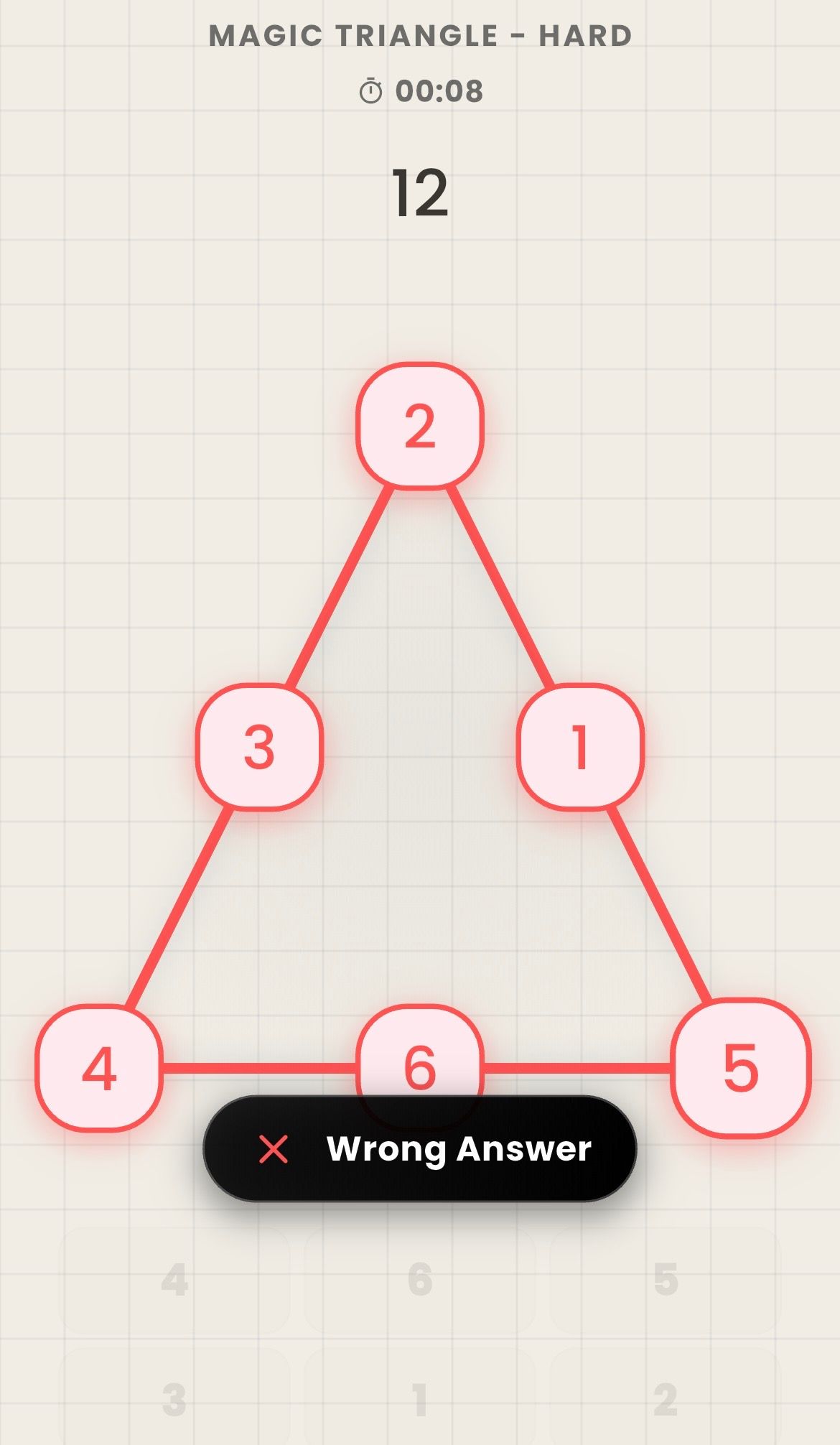
A Magic Triangle is a triangular arrangement of numbers placed at the corners and along the sides of a triangle. The challenge: arrange a set of numbers so that each side of the triangle adds up to the same total.
The basic version looks like this:
Place the numbers 1 through 6 into a triangle with 3 corners and 3 sides 2 numbers per side plus the corners so that every side adds up to the same sum.
Simple to explain. Surprisingly tricky to solve without a method. And once you find the right arrangement, you get a satisfying click of recognition the kind that makes you want to try a harder version immediately.
How It Works - The Rules
Rule 1: Every number in the set is used exactly once. No repeats. No gaps.
Rule 2: Each side of the triangle must add up to the same target sum.
Rule 3: Corner numbers are shared between two sides which means they affect two sums simultaneously. This is where the logic gets interesting.
💡 Key insight: The corner positions are the most constrained spots in a Magic Triangle. When you're stuck, focus on what numbers can and cannot go in the corners that's almost always where the solution unlocks.
Why This Puzzle Is Harder Than It Looks
The Corner Problem
In a standard 3-sided Magic Triangle using numbers 1 through 6, you have three corners and three side positions. Each corner number contributes to two sides which means placing a number in a corner constrains not one sum but two simultaneously.
This is what separates Magic Triangles from simpler number placement puzzles. You can't optimize one side without affecting another. Every decision has a ripple effect, and tracking those ripples is what demands the combination of logic and memory that makes this puzzle genuinely challenging.
The Memory Component
As you test different arrangements, you need to remember which combinations you've already tried otherwise you'll find yourself circling back to configurations you've already ruled out. That active tracking of "what I've tested" and "what I haven't" is working memory in action.
It's a subtle demand, but it's real. And it's exactly the kind of mental exercise that makes Magic Triangles more valuable as a brain training tool than they first appear.
💡 Did you know? The cognitive demand of tracking constraints across multiple positions simultaneously is the same mental process used in chess, strategic planning, and complex decision-making. Magic Triangles train that process in a compact, low-pressure format.
The Logic Behind the Magic
There's a Formula Hidden Inside Every Magic Triangle
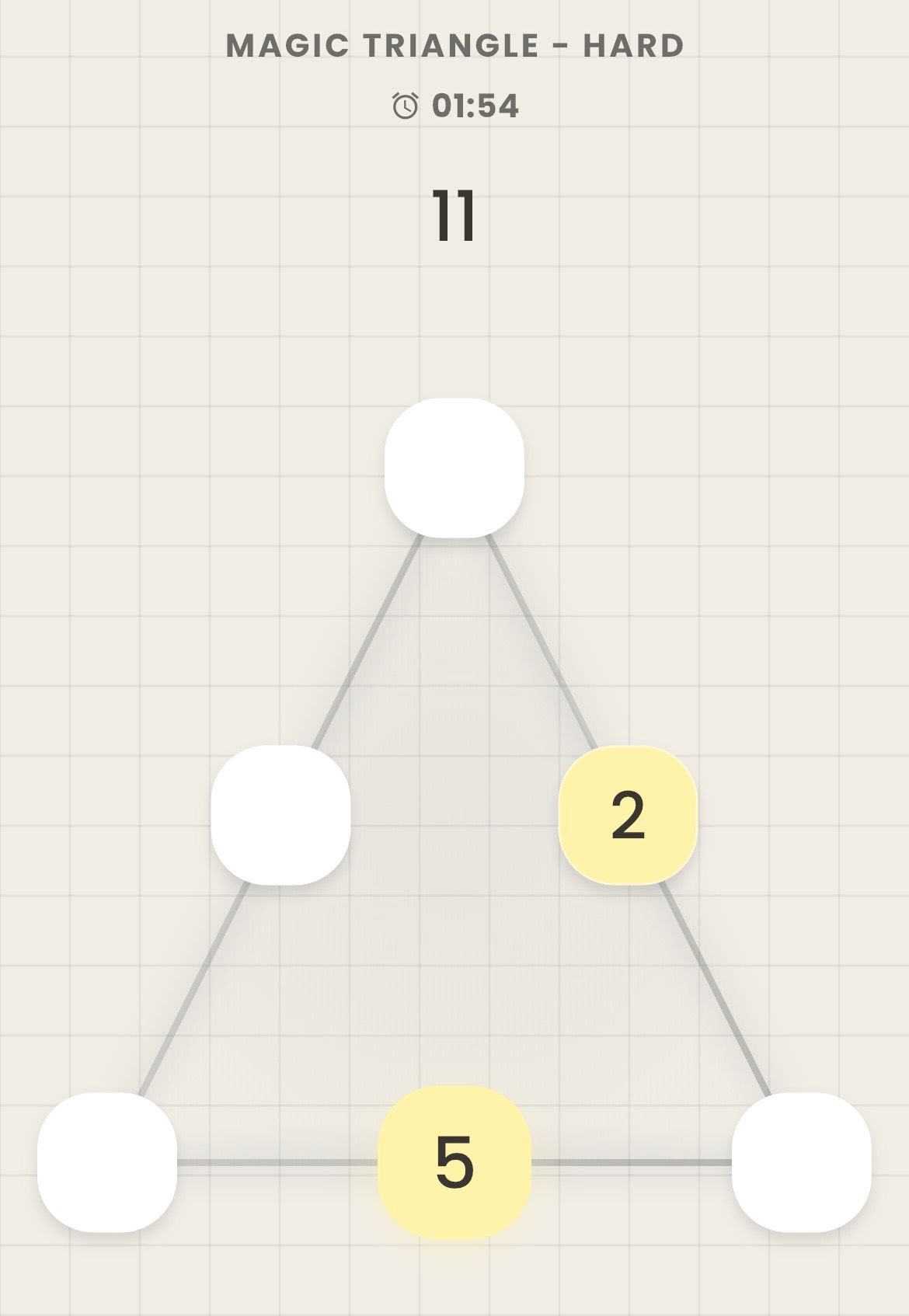
Once you understand the corner sum formula, Magic Triangles stop being guesswork and become pure logic. Here's how it works:
- Add up all the numbers you're placing in the triangle
- Multiply your target side sum by 3 (because there are 3 sides)
- Subtract the total of all numbers from that result
- The answer is the exact sum your three corner numbers must add up to
Find three numbers from your set that hit that corner sum, place them in the corners, and the remaining numbers slot into the sides almost automatically. What felt like trial and error becomes a structured, logical process and that shift is exactly what puzzle solving is supposed to teach you.
"Most people solve Magic Triangles by guessing. Once you learn the corner sum formula, you solve them by reasoning. The difference is everything."
What Magic Triangles Build in Your Brain
Constraint Satisfaction Thinking
Every Magic Triangle is a constraint satisfaction problem a situation where multiple conditions must be true simultaneously. The ability to think this way, holding several constraints in mind at once and finding an arrangement that satisfies all of them, is one of the most broadly applicable cognitive skills there is.
It shows up in scheduling, planning, negotiation, coding, and almost any complex decision-making scenario. Magic Triangles train it in its purest, most accessible form.
Active Working Memory
Tracking which numbers you've placed, which you haven't, which combinations you've tried, and how the corner positions affect each side all simultaneously is a genuine working memory workout. Regular practice with Magic Triangles strengthens the mental scratchpad that underpins almost every complex cognitive task.
Logical Confidence
There's something particularly satisfying about solving a Magic Triangle correctly not just because it's done, but because you know why it works. Every side checks out. Every number is placed with a reason. That sense of having reasoned your way to a correct answer, rather than stumbled into it, builds a quiet but durable confidence in your own thinking.
⭐ Fun fact: Magic squares and triangles have fascinated mathematicians for thousands of years. The earliest known magic square appears in Chinese mathematical texts from around 650 BC and the same underlying logic appears in Magic Triangles today. Some puzzles are ancient for good reason.
Who Are Magic Triangles For?
Magic Triangles work remarkably well across a wide age range. For younger learners, the beginner versions build addition fluency and introduce the idea that numbers can be arranged logically not just calculated. For older players, the advanced versions provide a genuine mental challenge that doesn't require any specialist knowledge to attempt.
And for anyone who finds standard puzzles either too mechanical (pure calculation) or too vague (open-ended logic), Magic Triangles hit a rare middle ground: structured enough to have a clear correct answer, open enough to require real creative reasoning to find it.
Ready to Try One?
The three challenges above are a starting point. Magic Triangles come in many forms different number sets, different target sums, different sizes and each one offers a slightly different mental workout.
Start with the beginner version. Apply the corner sum formula on the advanced one. And pay attention to the moment the arrangement clicks into place that feeling is the whole point.
One puzzle. That's all it takes to see why people keep coming back.