Which CalcQuest Game Should You Start With?
which calc quest game to start with, best puzzle game for beginners, how to start playing calc quest, number pyramid beginner, nonogram for beginners, quick calculation game, mini sudoku beginner, number pattern puzzle, logic games for beginners, best math game app, Calc Quest guide, puzzle app for all ages, where to start with logic puzzles, brain training app beginners, math puzzle game recommendation
Opening Calc Quest for the first time and not sure where to begin? You're not alone and the answer is more personal than you'd think.
Calc Quest has several different games each one training a different skill, rewarding a different kind of thinking, and suiting a different kind of player. Picking the wrong one first won't ruin anything. But picking the right one means your very first session feels satisfying rather than frustrating and that first impression matters more than most people realise.
This guide helps you find your starting point. Answer a few simple questions about how you think and what you enjoy and by the end, you'll know exactly which game to open first.
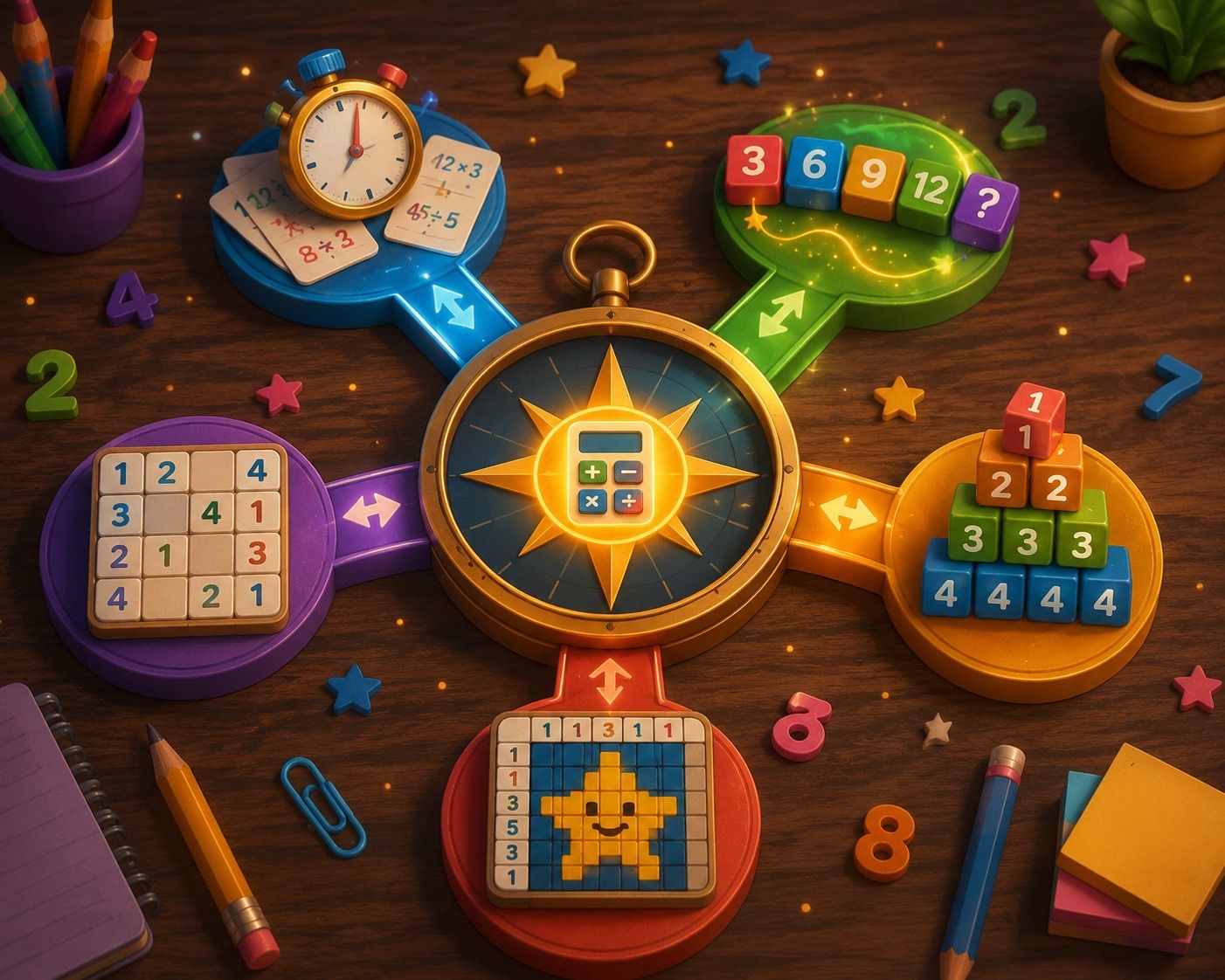
"The best starting point isn't the easiest game. It's the one that matches how your brain already works so you feel capable from the very first move."
Start Here What Kind of Thinker Are You?
Before jumping to a recommendation, ask yourself one honest question:
When you face a problem, what's your instinct?
- Do you dive straight in and figure it out as you go? → Go to Option A
- Do you look for a pattern or rule before making a move? → Go to Option B
- Do you prefer to see the big picture before focusing on details? → Go to Option C
- Do you like working through things one step at a time, slowly and carefully? → Go to Option D
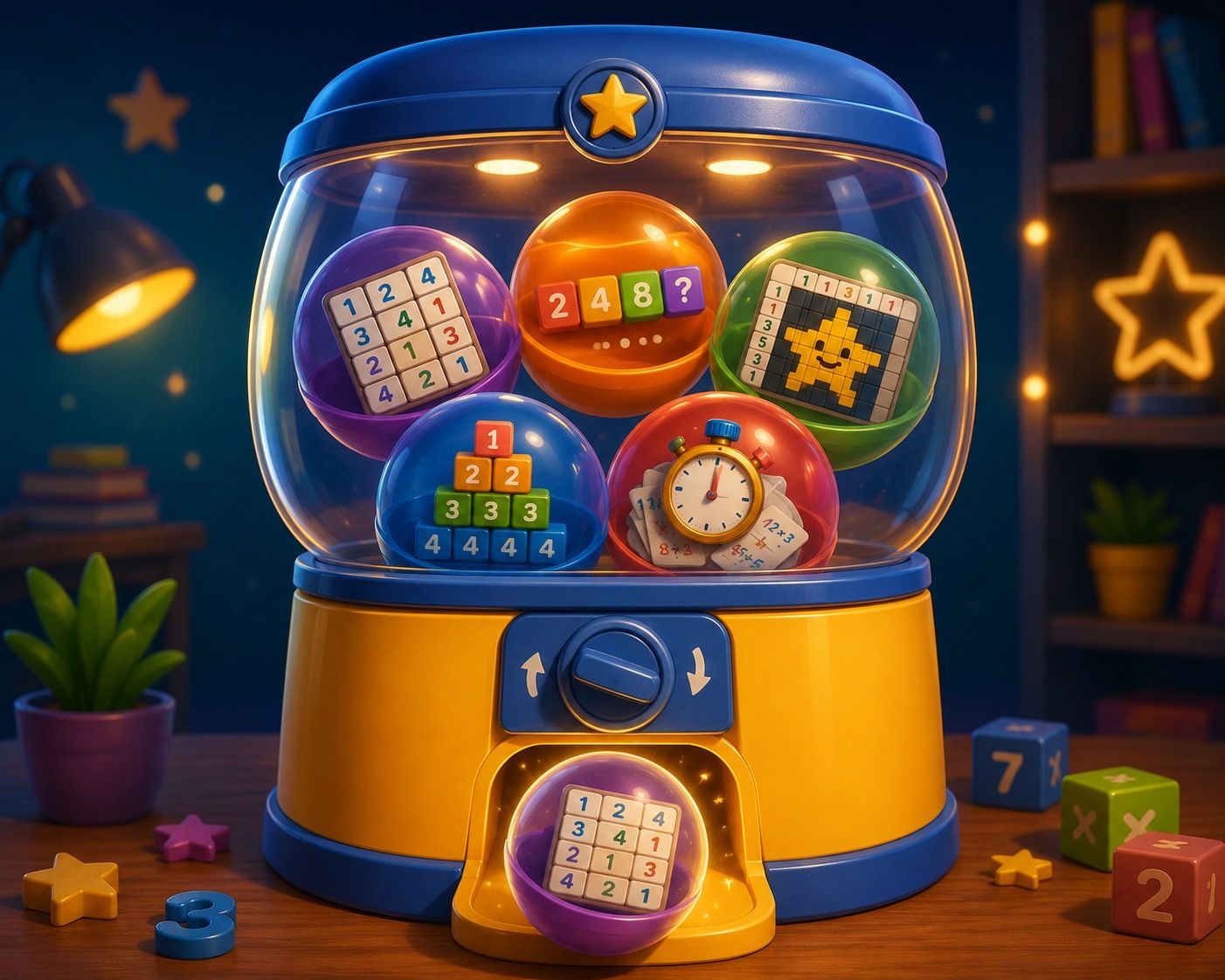
Option A- You Dive In and Figure It Out as You Go
Start With: Quick Calculation
You're action-oriented. You learn by doing, not by preparing. You'd rather make a move, see what happens, and adjust and you find overthinking more frustrating than making a mistake.
Quick Calculation is built for this exact approach. The format is simple: questions appear on screen, the timer runs, you answer as fast as you can. There's no setup, no rules to memorise, no grid to study before you begin. You just start and the game rewards you for it immediately.
It's also the game with the clearest progress tracking. Your score from today is your target for tomorrow. That feedback loop fast, visible, personal is exactly what keeps action-oriented players coming back.
💡 Why it works for you: You don't need to understand the whole system before you start. Quick Calculation gives you results immediately and results are what motivate you most.
What to expect: Fast questions, a running score, instant feedback on every answer. Your first session will feel slightly chaotic. Your second will feel noticeably better. That improvement is the point.
Option B- You Look for the Pattern Before Making a Move
Start With: Number Patterns
You're a natural analyst. Before you commit to an answer, you want to understand the rule behind it. You find random guessing uncomfortable not because you're afraid to be wrong, but because a lucky correct answer feels meaningless compared to a reasoned one.
Number Patterns gives you exactly what you need: a sequence with a hidden rule, and the satisfaction of finding it before anyone tells you what it is. Each puzzle is a small mystery with a clean solution and you'll find yourself moving through them faster than you expected once your brain gets into the rhythm.
This game also builds skills that transfer directly to every other game in Calc Quest. Pattern recognition is the foundation of fast mental math, logical deduction, and puzzle solving at every level. Starting here means every game you try later will feel slightly more familiar.
💡 Why it works for you: You already think in patterns you just haven't had a game that rewards that directly. Number Patterns does exactly that, every single session.
What to expect: Sequences with missing numbers, increasing complexity as you progress, and a growing sense that your brain is getting faster at spotting rules. Give it three sessions before judging the improvement curve is steep.
Option C- You Like Seeing the Big Picture First
Start With: Nonograms
You think visually. You like to understand what you're building before you start building it. You find purely abstract problems a bit dry but the moment a challenge has a visual dimension, your engagement jumps immediately.
Nonograms are the perfect starting point for visual thinkers. Every puzzle is a hidden image waiting to be revealed and your job is to reveal it one square at a time using the number clues along each row and column. The big picture literally appears as you solve, which means every correct move is immediately visible and satisfying.
Nonograms also happen to be one of the most naturally relaxing formats in the game. There's no timer pressure in the beginner levels. You can think at your own pace, enjoy the gradual reveal, and finish each puzzle with a complete image to show for your effort.
💡 Why it works for you: You're motivated by seeing something come together. Nonograms give you that experience with every single puzzle and the image at the end makes the whole session feel genuinely worthwhile.
What to expect: A grid, number clues on each row and column, and a hidden image that appears as you solve. Start with the smaller grids they reveal their image faster and give you the full satisfaction of completion within your first few minutes.
Option D- You Like Working Through Things One Step at a Time
Start With: Number Pyramids
You're methodical. You don't like leaving things unresolved. You prefer a clear structure a starting point, a logical sequence of steps, and a definite end. You find chaotic or open-ended problems frustrating, but give you a well-defined puzzle with a clear path and you'll work through it with complete focus.
Number Pyramids are structured almost perfectly for this personality. Each puzzle builds from the bottom up every number you place feeds directly into the row above it, creating a clear chain of cause and effect from your first move to your last. Nothing is ambiguous. Every step follows from the previous one.
The pyramid structure also makes your progress visually obvious. Every solved row is a completed layer and watching the pyramid fill from the bottom up is one of the most satisfying visual experiences in the game.
💡 Why it works for you: You like knowing exactly where you are in a process. Number Pyramids show you that at every step and they reward careful, methodical thinking more than any other game in Calc Quest.
What to expect: A triangular grid with some numbers filled in and some missing. Start from the row with the most numbers already placed that's always your entry point. Work upward. Check each row as you go. The top number, when it appears, will feel completely earned.
Not Sure Which One Fits? Start With Mini Sudoku
If none of the four options felt like a clear match or if you want something that eases you into logic puzzles without committing to a specific style Mini Sudoku is your answer.
It uses one simple rule (no number repeats in any row, column, or box), works on a small 4×4 grid that you can take in at a single glance, and produces a clean, satisfying solution in just a few minutes. It's the most universally accessible starting point in Calc Quest and it quietly teaches the kind of logical thinking that makes every other game easier once you've tried it.
💡 Mini Sudoku is the best "I'm not sure where to start" answer in the game. It's short enough to finish quickly, satisfying enough to make you want another, and simple enough that the logic clicks within your first puzzle.
A Quick Reference Guide
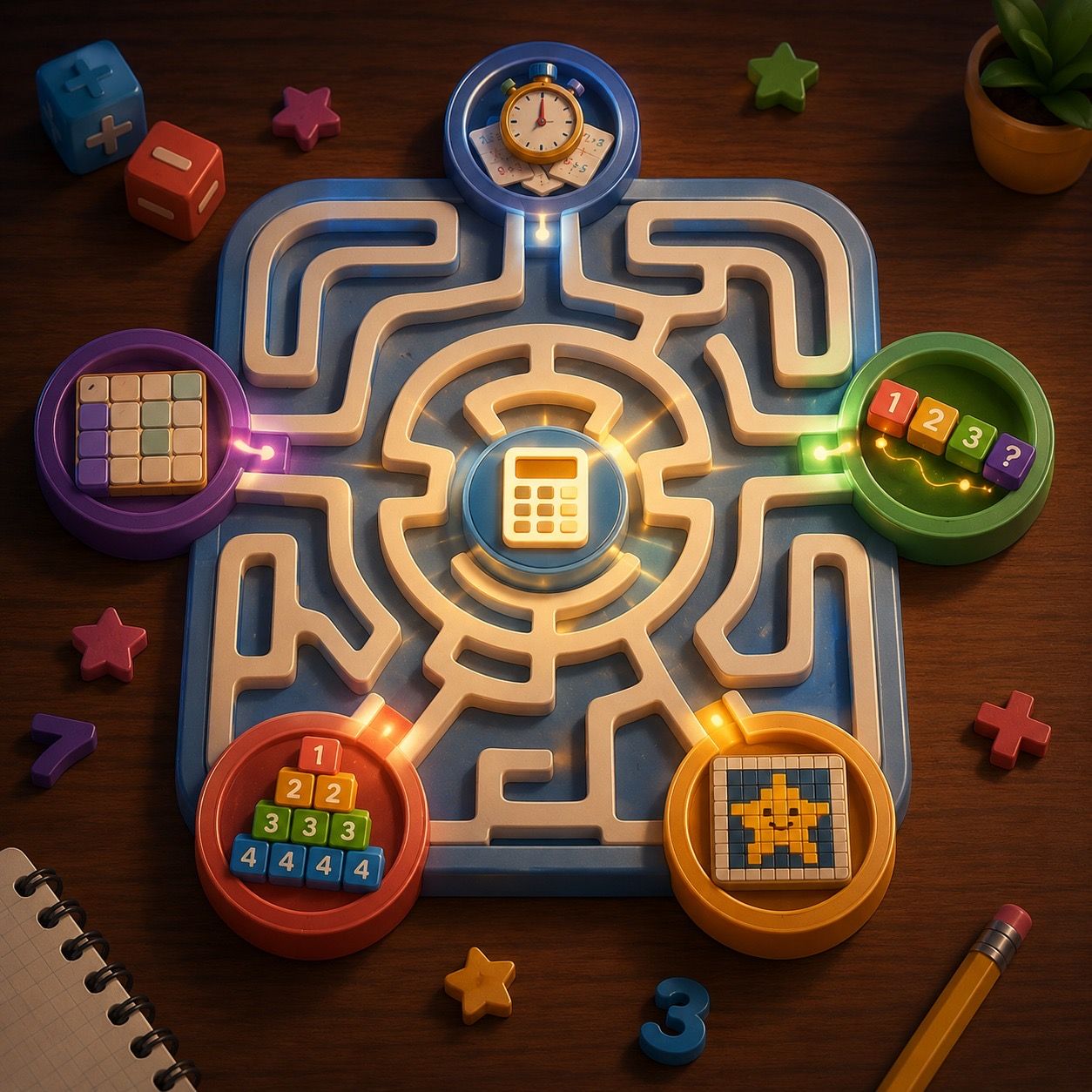
- You like speed and instant feedback → Quick Calculation
- You like finding rules and patterns → Number Patterns
- You think visually and love a reveal → Nonograms
- You like methodical step-by-step progress → Number Pyramids
- You want the best all-round starting point → Mini Sudoku
- You enjoy logic with a hidden trick → Magic Triangles
One More Thing Before You Start
The starting point is just that a starting point. Pick the one that matches how you think today. The rest of the games will still be there when you're ready for them.
"Every expert puzzle solver was once a beginner staring at a game they hadn't tried yet. The only difference between then and now is that they clicked start."
Your game is waiting. Go find it.